
El papel dual de los insectos como vectores y mitigadores de genes de resistencia antimicrobiana: Una revisión sistemática

Palabras clave:
Bacterias, insectos, genes de resistencia antimicrobianos, vectores, biorremediaciónBarra lateral del artículo
Contenido principal del artículo
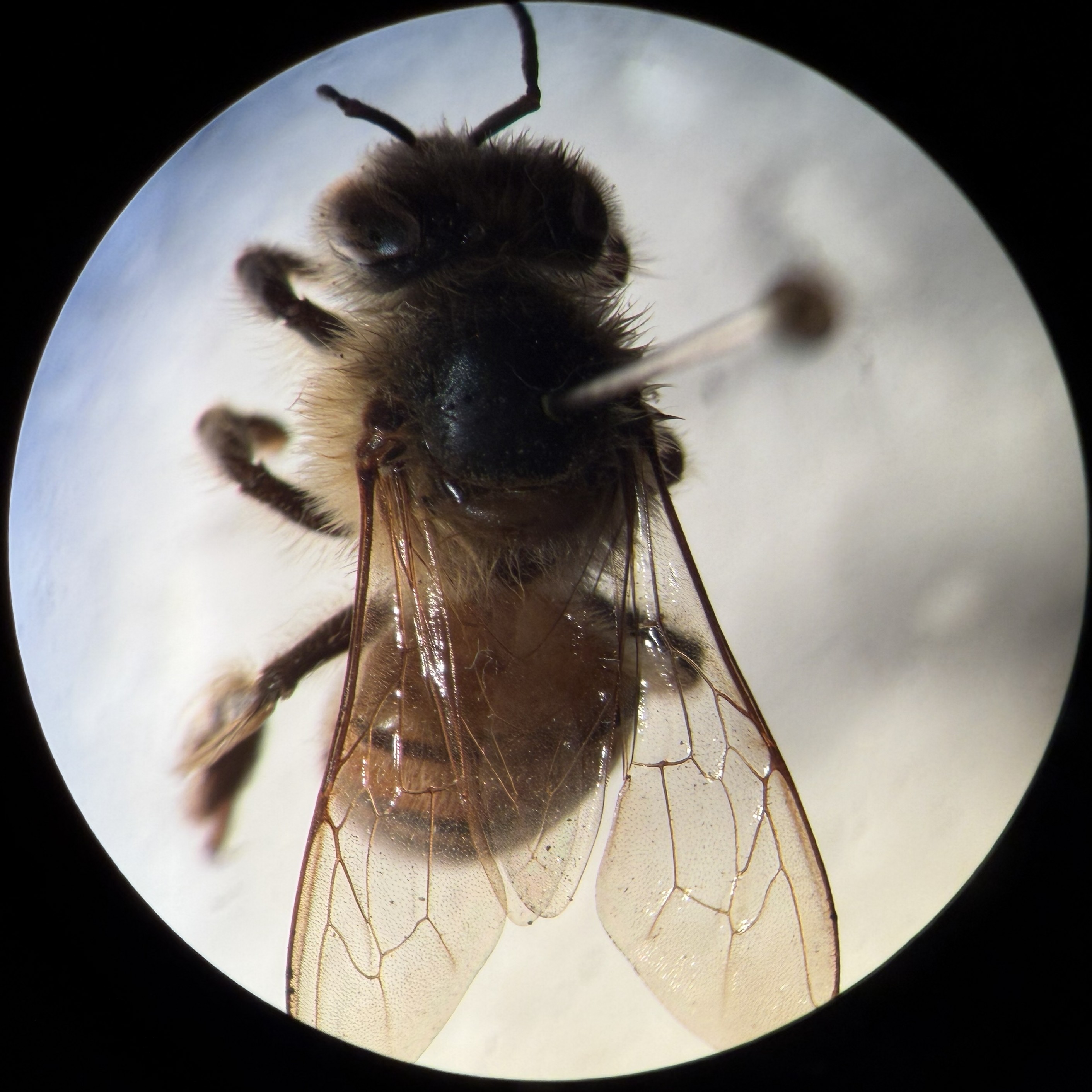
Existe una creciente preocupación a nivel global por la resistencia a los antimicrobianos (RAM), un fenómeno complejo que amenaza la salud pública y la seguridad alimentaria. El objetivo de esta revisión sistemática fue analizar el doble papel de los insectos, como vectores de diseminación y como agentes mitigadores de genes de resistencia antimicrobiana (ARGs), sintetizando la evidencia científica reciente entre 2015 y 2025. Se siguieron las directrices PRISMA, que analizó 26 estudios identificados en bases de datos científicas (Scopus, PubMed, SpringerLink). Los resultados demostraron que insectos sinantrópicos son vectores eficientes de ARGs de alta prioridad clínica (como mcr, blaNDM y blaCTX-M), actuando como puentes entre ambientes contaminados (granjas, hospitales) y humanos. Simultáneamente, se identificó que las larvas de insectos son agentes mitigadores altamente efectivos. A través de la bioconversión de residuos, reducen la abundancia y diversidad de ARGs mediante la remodelación del microbioma, la interrupción de la transferencia genética horizontal y la degradación de antibióticos residuales. En conclusión, los insectos presentan un papel dual en la crisis de la resistencia antimicrobiana: son una amenaza como vectores de propagación, pero también una solución biotecnológica prometedora para la biorremediación.
1. Jian Z, Zeng L, Xu T, Sun S, Yan S, Yang L, et al. Antibiotic resistance genes in bacteria: Occurrence, spread, and control. J. Basic Microbiol. 2021 Oct 14; 61(12): 1049-1070. Disponible en: https://doi.org/10.1002/jobm.202100201
2. Usui M, Tamura Y, Asai T. Current status and future perspective of antimicrobial-resistant bacteria and resistance genes in animal-breeding environments. J. Vet. Med. Sci. 2022; 84(9): 1292-1298. Disponible en: https://doi.org/10.1292/jvms.22-0253
3. Olaru I, Walther B, Schaumburg F. Zoonotic sources and the spread of antimicrobial resistance from the perspective of low and middle-income countries. Infect. Dis. Poverty. 2023 Jun 14; 12(59). Disponible en: https://doi.org/10.1186/s40249-023-01113-z.
4. Shahanaz E, Zwally K, Powers C, Lyons B, Kaufman P, Athrey G, et al. Flies as Vectors of Foodborne Pathogens Through Food Animal Production: Factors Affecting Pathogen and Antimicrobial Resistance Transmission. J. Food Prot. 2025 Jun 23; 88(7): 100537. Disponible en: https://doi.org/10.1016/j.jfp.2025.100537
5. Koutsoumanis K, Allende A, Álvarez A, Bolton D, Bover S, Chemaly M, et al. Role played by the environment in the emergence and spread of antimicrobial resistance (AMR) through the food chain. Eur. Food Saf. Authority J. 2021 Jun 17; 19(6): e06651. Disponible en: https://doi.org/10.2903/j.efsa.2021.6651
6. Debroas D. Global analysis of the metaplasmidome: ecological drivers and spread of antibiotic resistance genes across ecosystems. Microbiome. 2025 Mar 19; 13(1): 77. Disponible en: https://doi.org/10.1186/s40168-025-02062-5
7. Gwenzi W, Chaukura N, Muisa N, Teta C, Musvuugwa T, Rzymski P, et al. Insects, Rodents, and Pets as Reservoirs, Vectors, and Sentinels of Antimicrobial Resistance. Antibiotics. 2021 Ene 11; 10(1): 68. Disponible en: https://doi.org/10.3390/antibiotics10010068
8. Yin J-H, Kelly PJ, Wang C. Flies as Vectors and Potential Sentinels for Bacterial Pathogens and Antimicrobial Resistance: A Review. Vet. Sci. 2022 Jun 15; 9(6): 300. Disponible en: https://doi.org/10.3390/vetsci9060300
9. Fukuda A, Usui M, Okamura M, Dong H, Tamura Y. Role of Flies in the Maintenance of Antimicrobial Resistance in Farm Environments. Microb. Drug Resist. 2019Ene/Feb; 25(1): 127-132. Disponible en: https://doi.org/10.1089/mdr.2017.0371
10. Tao S, Chen H, Li N, Wang T, Liang W. The Spread of Antibiotic Resistance Genes In Vivo Model. Can. J. Infect. Dis. Med. Microbiol. 2022 Jul 18; 2022(1): 3348695. Disponible en: https://doi.org/10.1155/2022/3348695
11. Nawata K, Kadoya A, Suzuki S. Persistence of Marine Bacterial Plasmid in the House Fly (Musca domestica): Marine-Derived Antimicrobial Resistance Genes Have a Chance of Invading the Human Environment. Microb. Ecol. 2024 Ene 8; 87(1): 30. Disponible en: https://doi.org/10.1007/s00248-023-02341-4
12. Manniello M, Morita A, Salvia R, Scieuzo R, Lucchetti D, Vogel H, et al. Insect antimicrobial peptides: potential weapons to counteract the antibiotic resistance. Cell. Mol. Life Sci. 2021 Feb 17; 78(1): 4259-4281. Disponible en:
https://doi.org/10.1007/s00018-021-03784-z
13. Moretta A, Salvia R, Scieuzo C, Somma A, Vogel H, Pucci, P, et al. A bioinformatic study of antimicrobial peptides identified in the Black Soldier Fly (BSF) Hermetia illucens (Diptera: Stratiomyidae). Sci Rep. 2020 Oct 9; 10(1):
16875. Disponible en: https://doi.org/10.1038/s41598-020-74017-9
14. Piva S, Giacometti F, Marti E, Massella E, Cabbri R, Galuppi R, et al. Could honey bees signal the spread of antimicrobial resistance in the environment?. Lett. Appl. Microbiol. 2020 May; 70(5): 349-355. Disponible en:
https://doi.org/10.1111/lam.13288
15. Page M, McKenzie J, Bossuyt P, Boutron I, Hoffmann T, Mulrow C, et al. Declaración PRISMA 2020: una guía actualizada para la publicación de revisiones sistemáticas. Rev. Esp. Cardiol. 2021 Sep; 74(9): 79-799. Disponible en:
https://doi.org/10.1016/j.recesp.2021.06.016
16. Alfaisal, R., Hashim, H. Azizan, U. Metaverse system adoption in education: A systematic literature review. J Comput Educ, 2024 Dic 24; 11: 259–303. Disponible en: https://doi.org/10.1007/s40692-022-00256-6
17. Wang H, Li H, Gilbert JA, Li H, Wu L, Liu M, et al. Housefly Larva Vermicomposting Efficiently Attenuates Antibiotic Resistance Genes in Swine Manure, with Concomitant Bacterial Population Changes. Appl. Environ. Microbiol.
2015 Nov; 81(22): 7668–7679. Disponible en: https://doi.org/10.1128/aem.01367-15
18. Zhang J, Wang J, Chen L, Yassin AK, Kelly P, Butaye P, et al. Housefly (Musca domestica) and Blow Fly (Protophormia terraenovae) as Vectors of Bacteria Carrying Colistin Resistance Genes. Appl. Environ. Microbiol. 2018 Dic 15; 84(1): e01736-17. Disponible en: https://doi.org/10.1128/AEM.01736-17
19. Milanović V, Osimani A, Roncolini A, Garofalo C, Aquilanti L, Pasquini M, et al. Investigation of the Dominant Microbiota in Ready-to-Eat Grasshoppers and Mealworms and Quantification of Carbapenem Resistance Genes by qPCR. Front. Microbiol. 2018 Dic 16; 9(1): 3036. Disponible en: https://doi.org/10.3389/fmicb.2018.03036
20. Osimani A, Milanović V, Cardinali F, Garofalo C, Clementi F, Ruschioni S, et al. Distribution of Transferable Antibiotic Resistance Genes in Laboratory-Reared Edible Mealworms (Tenebrio molitor L.). Front. Microbiol. 2018 Nov 18; 9(1): 2702. Disponible en: https://doi.org/10.3389/fmicb.2018.02702
21. Onwugamba F, Fitzgerald J, Rochon K, Guardabassi L, Alabi A, Kühne S, et al. The role of 'filth flies' in the spread of antimicrobial resistance. Travel Med. Infect. Dis. 2018 May/Abr; 22(1): 8–17. Disponible en:
https://doi.org/10.1016/j.tmaid.2018.02.007
22. Abdolmaleki Z, Mashak Z, Safarpoor F. Phenotypic and genotypic characterization of antibiotic resistance in the methicillin-resistant Staphylococcus aureus strains isolated from hospital cockroaches. Antimicrob. Resist. Infect. Control. 2019 Mar 13; 8(1): 54. Disponible en: https://doi.org/10.1186/s13756-019-0505-7
23. Akter S, Momen A, Farzana Z, Kafi A, Rahman T, Saha S. Detection of antibiotic-resistant bacteria and their resistance genes from houseflies. Vet. World. 2020 Feb; 13(2): 266-274. Disponible en: https://doi.org/10.14202/vetworld.2020.266-274
24. Liu C, Yao H, Chapman S, Su J, Wang C. Changes in gut bacterial communities and the incidence of antibiotic resistance genes during degradation of antibiotics by black soldier fly larvae. Environ. Int. 2020 Sep; 142(1): 105834. Disponible en: https://doi.org/10.1016/j.envint.2020.105834
25. Poudel A, Kang Y, Mandal R, Kalalah A, Butaye P, Hathcock T, et al. Comparison of microbiota, antimicrobial resistance genes and mobile genetic elements in flies and the feces of sympatric animals. FEMS Microbiol. Ecol. 2020 Abr 1; 96(4): fiaa027. Disponible en: https://doi.org/10.1093/femsec/fiaa027
26. Grispoldi L, Karama M, El-Ashram S, Saraiva C, García J, Chalias A, et al. Hygienic Characteristics and Detection of Antibiotic Resistance Genes in Crickets (Acheta domesticus) Breed for Flour Production. Microbiol. Res. 2021 Jun 14;
12(2): 503-512. Disponible en: https://doi.org/10.3390/microbiolres12020034
27. Milanović V, Roncolini A, Cardinali F, Garofalo C, Aquilanti L, Riolo P, et al. Occurrence of antibiotic resistance genes in hermetia illucens larvae fed coffeemsilverskin enriched with schizochytrium limacinum or isochrysis galbana microalgae. Genes. 2021 Ene 31; 12(2): 213. Disponible en: https://doi.org/10.3390/genes12020213
28. Alarcón M, Osorio V, Salas R, Yareta J, Marcos P, Rodrigo M. Carbapenems and colistin resistance genes isolated in Musca domestica from a garbage dump near a hospital in Lima. Rev. Peru. Med. Exp. Salud Publica. 2024; 41(2): 164–170. Disponible en: https://doi.org/10.17843/rpmesp.2024.412.13257
29. Du S, Zhang Y, Shen JP, Hu H, Zhang J, Shu C, et al. Alteration of Manure Antibiotic Resistance Genes via Soil Fauna Is Associated with the Intestinal Microbiome. mSystems. 2022 Ago 8; 7(4): e0052922. Disponible en: https://doi.org/10.1128/msystems.00529-22
30. Landolsi S, Selmi R, Hadjadj L, Ben Haj Yahia A, Ben Romdhane K, Messadi L, et al. First Report of Extended-Spectrum β-Lactamase (blaCTX-M1) and Colistin Resistance Gene mcr-1 in E. coli of Lineage ST648 from Cockroaches in Tunisia. Microbiol. Spectr. 2022 Mar 1; 10(2): e0003621. Disponible en: https://doi.org/10.1128/spectrum.00036-21
31. Niu S, Liu S, Deng W, Wu R, Cai Y, Liao X, et al. A sustainable and economic strategy to reduce risk antibiotic resistance genes during poultry manure bioconversion by black soldier fly Hermetia illucens larvae: Larval density
adjustment. Ecotoxicol. Environ. Saf. 2022 Mar 1; 232(1): 113294. Disponible en: https://doi.org/10.1016/j.ecoenv.2022.113294
32. Okamoto M, Furuya H, Sugimoto I, Takamatsu D. Detection of macrolide resistance genes, ermC and ermB, in Japanese honey using real-time PCR assays. J. Vet. Med. Sci. 2022 Nov 1; 84(11): 1453–1456. Disponible en:
https://doi.org/10.1292/jvms.22-0307
33. Seyfi B, Hossainpour H, Kooti S, Jalilian F. Identification of Carbapenem Resistance Genes in Escherichia coli Isolated from Blattella germanica by Dot Blot Assay in Hamadan Hospitals, Iran – 2018. Iran. J. Med. Microbiol. 2022 Jul/Ago; 16(4): 357-362. Disponible en: https://doi.org/10.30699/ijmm.16.4.357
34. Sun H, Mu X, Zhang K, Lang H, Su Q, Li X, et al. Geographical resistome profiling in the honeybee microbiome reveals resistance gene transfer conferred by mobilizable plasmids. Microbiome. 2022 May 3; 10(1): 69. Disponible en: https://doi.org/10.1186/s40168-022-01268-1
35. Bertelloni F, Bresciani F, Cagnoli G, Scotti B, Lazzerini L, Marcucci M, et al. House Flies (Musca domestica) from Swine and Poultry Farms Carrying Antimicrobial Resistant Enterobacteriaceae and Salmonella. Vet. Sci. 2023 Feb 3;
10(2): 118. Disponible en: https://doi.org/10.3390/vetsci10020118
36. Neupane S, Talley J, Taylor D, Nayduch D. Bacterial communities and prevalence of antibiotic resistance genes carried within house flies (Diptera: Muscidae) associated with beef and dairy cattle farms. J. Med. Entomol. 2023 Nov 14; 60(6): 1388–1397. Disponible en: https://doi.org/10.1093/jme/tjad112
37. Zhao Z, Yang C, Gao B, Wu Y, Ao Y, Ma S, et al. Insights into the reduction of antibiotic-resistant bacteria and mobile antibiotic resistance genes by black soldier fly larvae in chicken manure. Ecotoxicol. Environ. Saf. 2023 Nov 1; 266(1): 115551. Disponible en: https://doi.org/10.1016/j.ecoenv.2023.115551
38. Bohm K, Taylor W, Gyawali P, Pattis I, Gutiérrez M. Black soldier fly-based bioconversion of biosolids: Microbial community dynamics and fate of antibiotic resistance genes. Sci. Total Environ. 2024 Jun 20; 930(1): 172823. Disponible en: https://doi.org/10.1016/j.scitotenv.2024.172823
39. Yang Y, Xu P, He W, Tao F. Metagenomic analysis reveals houseflies as indicators for monitoring environmental antibiotic resistance genes. Environ. Microbiol. Rep. 2024 Dic; 16(6): e70032. Disponible en: https://doi.org/10.1111/1758-2229.70032
40. Bello T, Van B, Harders F, Bossers A, Brouwer M, Haenen O. An Insight into the Presence of Antimicrobial Resistance Genes in Opportunistic Pathogenic Bacteria Isolated from Farm-Reared Crickets. Microorganisms. 2025 Feb 10; 13(2): 391. Disponible en: https://doi.org/10.3390/microorganisms13020391
41. Carramaschi I, Lery L, Chagas T, Zahner V. Klebsiella spp. carried by insects as a reservoir of virulence and resistance to antimicrobials. One Health (Amst.). 2025 May 8; 20(1): 101064. Disponible en: https://doi.org/10.1016/j.onehlt.2025.101064
42. Zhao Z, Gao B, Henawy A, Rehman K, Ren Z, Jiménez N, et al. Mitigating the transfer risk of antibiotic resistance genes from fertilized soil to cherry radish during the application of insect fertilizer. Environ. Int. 2025 May; 199(1): 109510. Disponible en: https://doi.org/10.1016/j.envint.2025.109510
##plugins.themes.bootstrap3.displayStats.downloads##

Esta obra está bajo una licencia internacional Creative Commons Atribución-NoComercial-CompartirIgual 4.0.